(When Lilacs Last in the Door-yard Bloom’d)
My lifetime has seen the Civil War and the rise of the United States as a commercial and political power. I have witnessed both the apex and the abolition of slavery. I cherish the memories of the rapid growth and expansion of the United States, its potential seemingly limitless in that early era. While the sectionalism and violence of the Civil War threatened to break apart and destroy the boundless possibilities of our country, the life cycles of individuals are what kept us eternal and strong as a nation. People are born, they age and reproduce, and they die. When flowers die in the winter, they rebloom in the springtime, and they vow to mourn the fallen friends every year just as new buds are appearing. The death of bin Laden gives us a sense of poignant satisfaction, as linking death to life helps to give a deeper significance to the deaths of so many soldiers and American citizens that died that September.
Tuesday, May 10, 2011

Friday, April 15, 2011
row, row, row your boat
Our discussion in class on Wednesday about Thoreau encouraging people to go their own away and not "becoming part of the machine," reminded me a lot of what we had talked about just earlier that morning in Political Theory. Thoreau emphasized being the importance of being the minority and not just mindlessly agreeing with the majority. In Poltical Theory on Wednesday we read an excerpt of a man named Michael Oakeshott who said, "Government should keep us afloat, not force us to row." It's clear that Oakeshott feels similarly: he believes the government should not be too involved in daily life, and that different ideas and opinions within government are extremely important. He seemed to think that participation in government would lead to problems. This struck a chord with me, especially after analyzing Putnam's "Bowling Alone" and doing all this research on voluntary associations. This led me to think about how diversity would (and does) work in our current government: we only have two (and a half) parties in congress, and it seems to cause more problems than solutions, what with the current budget controversy. In theory, I would definitely agree with Thoreau and Oakeshott's view that having little-to-no diversity in government could lead to Tocqueville's tyranny of the majority, but in practicality, how effective would this actually be? Especially if there were more than just two (and a half) opinions! No one would agree on anything and in turn, nothing would get done.
Senior year, I took sociology with one of the more popular teachers at my high school. Shea was pretty unconventional - he was from Pittsburgh so he had a "tell it like it is" demeanor and, in a way, was pretty insensitive. But he definitely taught us a lot. One of his favorite sayings was "The 80/20. 80% of people either don't know or don't care, so it's up to the 20% to lead and make the difference." One of his jobs as the sociology teacher was to create projects for us to get involved and improve our community, such as canned food drives, etc. But my school had a reputation in our area as being kind of disinterested and even unsuccessful (which isn't true, but that's a different story). My school was 50% white, meaning the other 50% were kids from minority backgrounds and slightly lower economic statuses than the rest of the town. It was hard to get students involved and care about the school when the majority of them didn't come from families that were able to be involved or care about their community because they were always working at their lower-wage jobs. Shea would get visibly frustrated with the students that clearly weren't interested about things that were pretty important, and would use the 80/20 analogy to get them to wake up. He would emphasize that the 80% were ignorant, disinterested, and generally did whatever everyone else did. (When he was really mad, he would say the ratio was 90/10). This definitely affected me, just because being part of the 80 (or 90) was so unappealing to me. I wanted to be part of the 10-20%: a leader, a free thinker, someone that was capable of making a difference and influencing others to do the same. But, he definitely had a point when he said the majority of people just go with the flow and do what they're told. And in a way, this is effective. The 20% students at my school would just spread the word about projects and food drives and encourage the other 80% to participate. Through this method, we were able to achieve results beyond our goals, and our projects were always successful.
Obviously, there are instances where the 20% aren't using their power for good. And in that case, we can only hope and pray that there are people in the 80% that are awake enough to question their leaders and even out the ratio in order to improve life for everyone.
Senior year, I took sociology with one of the more popular teachers at my high school. Shea was pretty unconventional - he was from Pittsburgh so he had a "tell it like it is" demeanor and, in a way, was pretty insensitive. But he definitely taught us a lot. One of his favorite sayings was "The 80/20. 80% of people either don't know or don't care, so it's up to the 20% to lead and make the difference." One of his jobs as the sociology teacher was to create projects for us to get involved and improve our community, such as canned food drives, etc. But my school had a reputation in our area as being kind of disinterested and even unsuccessful (which isn't true, but that's a different story). My school was 50% white, meaning the other 50% were kids from minority backgrounds and slightly lower economic statuses than the rest of the town. It was hard to get students involved and care about the school when the majority of them didn't come from families that were able to be involved or care about their community because they were always working at their lower-wage jobs. Shea would get visibly frustrated with the students that clearly weren't interested about things that were pretty important, and would use the 80/20 analogy to get them to wake up. He would emphasize that the 80% were ignorant, disinterested, and generally did whatever everyone else did. (When he was really mad, he would say the ratio was 90/10). This definitely affected me, just because being part of the 80 (or 90) was so unappealing to me. I wanted to be part of the 10-20%: a leader, a free thinker, someone that was capable of making a difference and influencing others to do the same. But, he definitely had a point when he said the majority of people just go with the flow and do what they're told. And in a way, this is effective. The 20% students at my school would just spread the word about projects and food drives and encourage the other 80% to participate. Through this method, we were able to achieve results beyond our goals, and our projects were always successful.
Obviously, there are instances where the 20% aren't using their power for good. And in that case, we can only hope and pray that there are people in the 80% that are awake enough to question their leaders and even out the ratio in order to improve life for everyone.
Saturday, March 5, 2011
democracy: a drunken pleasure-cruise?
In my Political Theory class, we're learning about the defense and arguments against democracy. It's so interesting to be reading deTocqueville's love story about American democracy, and then reading about Plato's complete opposition to democracy! According to Plato, democratic self-government does not work because ordinary people have not learned how to run the state. They are not familiar enough with such things such as economics, military strategy, conditions in other countries, or the complications of law and ethics. They are also not inclined to acquire such knowledge. The effort and self-discipline for serious study is not something most people dedicate themselves. In their ignorance, they vote for politicians who beguile them with appearances and convincing speeches, and inevitably find at the mercy of administrations and situations over which they have no control because they do not understand what is happening to them. They are guided by unreliable emotions more than by careful analysis, and they are lured into wars and victimized by costly defeats that could have been avoided. This is how the Republic portrays politics in a democracy, with the ship as the state, the captain representing the majority of the people, and the sailors as politicians:
He compares ruling to navigation: steering the ship of state. If we leave navigation to the mob, we can imagine what sort of chaos would ensue: a "drunken pleasure-cruise," says Plato. But maybe democracy is more about achieving the things we value, as opposed to achieving things efficiently. Maybe navigation doesn't always have such a clear purpose of efficient arrival at pre-chosen destinations. What if instead, we compared democracy to a "training voyage," in which everyone had a turn at the helm. Why shouldn't a journey in the ship of state be a drunken pleasure-cruise? What's wrong with that, at least, if everyone has a good time and we all eventually get to to the destination safely?
Imagine then a ship or a fleet in which there is a captain who is taller and stronger than any of the crew, but who is a little deaf and has a similar infirmity in sight, and whose knowledge of navigation is not much better. The sailors are quarreling with one another about the steering—every one is of the opinion that he has a right to steer, though he has never learned the art of navigation …
[The sailors] throng about the captain, begging and praying him to commit the helm to them; and if at any time they do not prevail, but others are preferred to them, they kill the others or throw them overboard, and having first chained up the noble captain’s senses with drink or some narcotic drug, they mutiny and take possession of the ship and make free with the stores, thus eating and drinking. They proceed on their voyage in such a manner as can be expected of them. Him who is their partisan and cleverly aids them in their plot for getting the ship out of the captain’s hands into their own whether by force or persuasion, they compliment with the name of sailor, pilot, able seaman, and abuse the other sort of man, whom they call a good-for-nothing; but that the good pilot must pay attention to the year and seasons and sky and stars and winds, and whatever else belongs to his art, if he intends to be really qualified for the command of a ship, and that he must and will be the steerer, whether other people like it or not—the possibility of this union of authority with the steerer’s art has never seriously entered into their thoughts or been made part of their calling.
He compares ruling to navigation: steering the ship of state. If we leave navigation to the mob, we can imagine what sort of chaos would ensue: a "drunken pleasure-cruise," says Plato. But maybe democracy is more about achieving the things we value, as opposed to achieving things efficiently. Maybe navigation doesn't always have such a clear purpose of efficient arrival at pre-chosen destinations. What if instead, we compared democracy to a "training voyage," in which everyone had a turn at the helm. Why shouldn't a journey in the ship of state be a drunken pleasure-cruise? What's wrong with that, at least, if everyone has a good time and we all eventually get to to the destination safely?
Sunday, February 27, 2011
just some inspirational tunes
John Legend has been one of my favorite artists for a couple years now, and last summer he came out with an album with the Roots called "Wake Up" and they made some tracks meant to inspire people to get involved and start caring about the situations in Haiti and many others. Thought I'd share some of the songs here:
Law in the Time of Cholera and Earthquakes: Enforcing Rights to Reduce Haiti's Vulnerability
Upon attending the panel on February 22 with Laura Flynn, Brian Concannon, and Paul Miller I realized a lot about the relationship between Haiti and the United States that I had not previously thought about. Laura Flynn painted a vivid picture of what she experienced when she visited Haiti after the earthquake: “a sea of rubble with a plastic band aid over it.” She explained to us that there was horrible infrastructure before the earthquake – and it was made even worse after the thirty-five second disaster. There were buildings that were not destroyed though, and those buildings, the panelists told us, were the big buildings that people put a large sum of money into. It was all the poor housing that fell; there was not enough concrete and rebar from the beginning to hold up these buildings. The earthquake could have been survivable – there have been worse earthquakes in other parts of the world with a much lower death count. But because of the immense poverty, housing was inadequate and already falling apart even before the quake; it was just that no one had the money to live anywhere else.
Another shocking fact for me: two hundred thousand people died because of Human Rights Violations. The government did not enforce zoning and construction laws. The panelists went on to explain that Haiti was – and maybe still is – unable to enforce a wide variety of Human Rights. That is what separates the United States and other wealthy nations from third world countries, or less fortunate nations. The government is unable to enforce child support laws, labor laws, or keep the educational system up to par. Maybe this is in part due to the relationship the United States keeps with Haiti: we fail to respect their rights. Bill Clinton’s trade plan with Haiti pushed Haitians to drop their tariffs and in turn, pushed farmers off their land. Aid policies also forced them off the land: we would give NGO’s American agricultural goods for them to distribute and took away Haitians’ ability to sell and grow their own crops. When I heard this, I was completely shocked and even mortified. What kind of country are we if we cripple the abilities of other countries that we claim to be helping?
And where is all the money we have been sending actually going? Countless governments have promised money, and apparently very few have delivered as of yet. Some of the money is for rebuilding, which has not started yet, and the period for immediate aid is over. Haiti is currently in an in-between stage where no money is helping them. There is a multitude of NGO’s in Port-au-Prince that are controlling where the money goes, and many Haitians have no influence or knowledge of what is going on. It seems as though our democratic government is not actually helping Haiti to grow into their own democratic nation. The panelists told us about the US foreign policy to keep Aristide in South Africa – to keep him quiet? But what are we afraid of? That Aristide will rally supporters that will complain about our help (or lack thereof)? How hypocritical of the United States to set up two Right-Wing candidates to be elected for president in a Left-Wing country, and preventing the vote of the Haitian people to actually count. It infuriates me to think that the United States can have so much power over another nation – and have the power to actually help and improve another country’s situation – but instead choose to cripple them in order to remain in power. It is almost disgusting.
Friday, February 25, 2011
thought of the day:
"Democracy is like blowing your nose. You may not do it well, but it's something you ought to do yourself."
-G.K. Chesterton
-G.K. Chesterton
Tuesday, February 22, 2011
super long sentence
Cullen's sentence:
The central figure in Whig party politics and ideology was Henry Clay, who championed what he called "The American System," whereby high tariffs on foreign goods would promote northern industry by making domestic products comparatively cheaply, which in turn would foster strong demand for western foodstuffs and southern cotton to fuel an industrial revolution. (p. 73)My sentence:
The professor for AmCon Section B, DeAne, introduced to the class the idea of democracy in the Second Great Awakening, in which Christianity was spread throughout the early nation, and in turn influenced future Americans to spread their political ideas everywhere else, which evoked much thought and discussion within the classroom.
Wednesday, February 16, 2011
Democracy in the Second Great Awakening
George W Bush in his second inaugural address claimed: "the best way to ensure America's security is to spread democracy throughout the world. The defense of freedom requires the advance of freedom."
This makes it seem that today's idea of democracy is the idea of spreading it, and that idea seems prominent in the Second Great Awakening. This was an era all about spreading religion, and in Hatch's excerpt we read, it talks about how the church was the first thing to motivate the people, even more so than politics. The American ideal of spreading democracy today seems to come from the same things that propelled the spread of religion.
This makes it seem that today's idea of democracy is the idea of spreading it, and that idea seems prominent in the Second Great Awakening. This was an era all about spreading religion, and in Hatch's excerpt we read, it talks about how the church was the first thing to motivate the people, even more so than politics. The American ideal of spreading democracy today seems to come from the same things that propelled the spread of religion.
Friday, February 11, 2011
my idea of democracy
Democracy is, by definition, “a system of government by the whole population or all the eligible members of a state typically through elected representatives,” as well as “the practice or principles for social equality.” The actual practice of democracy – its advantages, its limitations, how it is incorporated into today’s America and even all over the world – is hardly agreed upon. There are some that believe democracy is fair, free, open, honest elections – and others believe it is much, much more than that; that democracy is the institution of a government for the people, by the people, and employed for the benefit and safety of the citizens.
The philosopher Thomas Hobbes argued, “nothing could be worse than life without the protection of the state, and therefore strong government is essential to ensure that we do not lapse into the war of all against all.” This concept is very similar to Abraham Lincoln’s ideals expressed in his Gettysburg Address and second inaugural speech: that the country is better united than it is divided; that a unified government would prevent the continuation of the Civil War and internal conflict. Hobbes also emphasized the Laws of Nature; basically the Golden Rule of “do unto others as you would have them do unto you.” The opposite of this, what he refers to as the natural state where there is no unified government, there is no law to protect citizens from crime, and so everyone is violently defensive and relies on their instincts to survive at all costs, even when it puts others in harm. He writes that the best advantage of a unified government is that it creates conditions under which people can live safely without a constant guard up and follow the Laws of Nature.
This ideology is relevant even today, as shown in President Obama’s State of the Union Address: “We are part of the American family. We believe that in a country where every race and faith and point of view can be found, we are still bound together as one people; that we share common hopes and a common creed…. What comes of this moment will be determined not by whether we can sit together tonight, but whether we can work together tomorrow. I believe we can. And I believe we must. That's what the people who sent us here expect of us. With their votes, they've determined that governing will now be a shared responsibility between parties. New laws will only pass with support from Democrats and Republicans. We will move forward together, or not at all -- for the challenges we face are bigger than party, and bigger than politics.” He emphasizes that there should be no disparity between political parties, race, or any other cultural divider; that the dissension between fellow American citizens makes the country weak. He also speaks of the voters as being the reason for improvement, the reason for an expectation of unity, strength, and harmony within the nation – the epitome of democracy to a contemporary American voter.
To me, pure democracy is the practice of giving citizens the importance of expressing their opinions and the guarantee that their voice makes an impact in their society. It is the promise of security and comfort of knowing that their hopes and needs will be heard and that they will make a difference. The perfect illustration of democracy has yet to be found, though. There are always faults within the establishment, whether it is not representative enough that one political leader gets too much power over his or her constituents, or it is too representative that uneducated persons can have too much influence, such as with a referendum system.
However, the idea of democracy shapes the everyday actions of those who believe in its worth. Those who support its ideals may go as far to implement the same values in other countries, such as the case in Egypt today. It may cause some cultural differences between citizens of democratic nations and citizens of countries with dictatorships, as if the democratic citizens cannot even comprehend the restrictions of living with a dictator while those under dictatorships appreciate the easiness of never having to choose. It is quite effortless for the citizens of a democratic nation to proudly hold up their flag in other nations, waving their influence and freedom seemingly in their faces, as they have that sort of power in their own country and believe in the right to social equality for everyone.
Monday, December 6, 2010
the modern american dream
"...I believe deeply that we cannot solve the challenges of our time unless we solve them together - unless we perfect our union by understanding that we may have different stories, but we hold common hopes; that we may not look the same and we may not have come from the same place, but we all want to move in the same direction - towards a better future for of children and our grandchildren." - Barack ObamaTo me, these words exemplify perfectly what it means to be a modern American. Even though slavery was abolished over 200 years ago, and the Civil Rights movement ended a little over 30 years ago, racism and prejudice are still present in today's society. However, modern America is trying as a whole to eliminate these prejudices and move forward as a group. What makes us truly American is accepting that we are all different - except for our ideals for the future.
Friday, December 3, 2010
Frederick Douglass
I was surprised when reading The Narrative of Frederick Douglass to find that it is just as much of a public argument as it is a private account. Douglass introduces the reader to his own situation—his birthplace and the fact that he does not know his own age, then generalizes from his own experience, explaining that almost no slaves know their true ages. Next, Douglass takes this detail of his experience and analyzes it. He points out that slave owners deliberately keep their slaves ignorant, and that this is a tactic whites use to gain power over slaves. This structure recurs throughout his Narrative: he presents his personal experience as a typical slave experience, and then usually makes an analytical point about the experience and what it tells us about how slavery works and why it is wrong. The main tactic of Douglass’s antislavery argument is to analyze the institution of slavery and show how and why it works. The analysis would then demystify slavery and reveal its brutality and wrongness, leaving the readers with no choice but to want to remove the institution. This seems to be an excellent tactic of argumentation, stating facts and analyses that no one can really doubt, and then planting seeds of thought in their mind on how wrong the other side is.
Monday, November 29, 2010
conversations on freedom
Some notes Erik and I took today:
How do we make people free?
Jefferson—free-est when ruled by wisest, free from obligations
Zinn—focuses on how Americans treated other people, freedom is not oppression
Anne Hutchinson—come to America to be free, oppressed anyway
Zinn and Anne Hutchinson talk about non-oppression as freedom, Jefferson justifies
+/- freedom
AH part of white settlement, Jeff mad about provlamation line, Zinn oppressing NA
Jefferson: The common man can be freed by being ruled by the wise.
Zinn: Oh yeah? What makes a man wise? Being white? Rich? A male?
Jefferson: Yes, all of those. Wealth makes him free from financial obligations; wage slaves could never be free. White race makes him free from slavery.
Anne Hutchinson: Males shouldn’t rule society. John Winthrop was not wise, but jealous of my influence. Freedom means living a morally good life. You must be free to determine what a morally good life is based on your own religious views. Religion shouldn’t be hierarchical and rule based.
Jefferson: Women are tied down with children and domestic duties. You cannot truly be free, and will impede the progress of a democracy.
Zinn: Women are only unfree because men enslaved them. Indentured servant women were frequently raped by their owners. Say, Jefferson, didn’t you have an affair with a slave girl?
Jefferson: I’m free to do what I choose because I’m a rich white male!
Zinn: You were also oppressing Native Americans by taking their land to progress your white western democracy. Part of your justification for revolution was wanting to cross the proclamation line. And Anne Hutchinson, were did the land for the Puritan settlements come from?
Anne Hutchinson: The settlements were necessary to provide a place were people could be free to live a morally good life free from the corruption of the Anglican church. Freedom is not the absence of oppression, but the presence of pressures to keep you on the path to holiness.
Jefferson: Yes, society can be improved by having the wise rule and requiring the uneducated to live well.
what constitutes a good conversation?
Throughout the day, we have many different conversations with people. But how many of them are actually good conversation? I think a good conversation is one where everyone involved is able to listen and feel free to ask questions or disagree; where not everyone has to have the same opinion. A good conversation influences the thoughts of the participants, even after the conversation is over, encouraging them to reflect on it and let it impact the rest of their day because it was that meaningful or interesting. People should be open minded and willing to accept new ideas, instead of insisting that only their own are right. On the other hand, people should not be afraid to speak up and voice their own opinions. The best way for a conversation to be good is to have different opinions and ideas come out into the open and be able to float around for others to hear out, whether it's to agree or disagree.
Friday, November 19, 2010
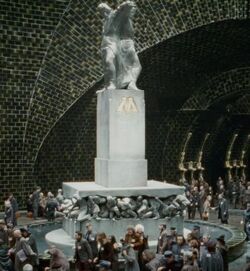
white is might?
Wednesday, November 17, 2010
home is where the heart and soul is
According to Uptons's "From an American Icon," houses are an integral part of a family's identity.
Buying a house is one of the most important things a person does in his life, almost the same as getting married or having a first child. It marks a milestone in life and the mark of a new family moving away from their established families, embarking on their own individual journey. People raise children, entertain hobbies, entertain other people, entertain themselves in a house. Everything inside of it is individual to that particular family, and the architecture and landscape, as well as the furnishings and items inside of the house, help to tell the story/history of that family. We know so much about people in American history due to the things found in houses, and the way the houses were constructed. Houses are an amazing dense fact used to describe American history and life.
"The house owes its importance to its association with the family. All the indigenous and immigrant cultures who have lived in what is now the United States have identified the family as the core institution of their societies, although they have defined it in very different ways. However they are defined, families are complex institutions. Shared values bind them, but internal divisions distinguish their members as individuals and according to their assigned roles, as spouses, parents, children, servants. Equally important, families have histories - gene pools, genealogies, family stories and traditions: they are constellations of memories that surface in surprising ways from one generation to the next."
Monticello
In 5th grade, my teacher took us on a field trip to Monticello. I remember walking around outside - it was a gloomy day and everyone was running around in the mud. Last night's reading brought me back to everything I saw back then, but it made me wish I could go there now, after reading the history behind the architecture and landscape. I would like to notice the architectural details Jefferson installed and analyze the reasons he did so - to make a political statement, to create an identity with the "American House," because he was inspired by neo-classicism and French architecture. It would be so enlightening to actually see the things we read about. That's one of the things I love so much about living near DC - a lot of the things I read about in history classes are the things I have access to see almost any day I want. Maybe I'll go to Monticello this summer...
Sunday, November 14, 2010
epitaph?
I know this was kind of a joke in class, to make a blog about what I want on my epitaph... but maybe it wouldn't be a bad idea to write out what I'd like to be known for; what I would like to have accomplished by the time I die.
So:
Here was buried Jessica Guzman
Instrumental in the solution of displaced peoples and refugees all over the world
Influential in international relations from 2020-2060.
Loved mother and wife.
So:
Here was buried Jessica Guzman
Instrumental in the solution of displaced peoples and refugees all over the world
Influential in international relations from 2020-2060.
Loved mother and wife.
the architecture of education
I was sitting in Regents while I was reading David Orr's Architecture and Education earlier today, which is fitting, as it seems to manifest a lot of the same ideals that Orr writes about. Here's an excerpt from the St. Olaf website about Regents:
Regents Hall is a sustainable or “green” building that serves as a teaching tool and speaks to the integrity of a St. Olaf education. A green building has measurably lower operating costs, minimizes the impact on the environment and promotes whole health for its users. With features such as a green roof, reliance on passive solar lighting, and the minimization of chemical and biological waste, Regents Hall is not simply a model for responsible environmental stewardship but a daily working example of sustainability in practice.
Orr talks about the idea of an academic building being able to tell a story; to teach students as much as the professors inside them do; to contribute to the occupants' overall well-being. He goes on to explain the project he started at Oberlin College to build a sustainable building that implicitly teaches its inhabitants to be more sustainable, to "promote ecological competence and mindfulness, and to show our problems are solvable and that we are connected to the larger community of life." I feel like Regents does that, at least a little bit, by using recycled materials, a green roof that helps lower heating and cooling energy, its water conservation methods, having abundant natural light from all its large windows, and the list goes on. It's neat that a building can show us better ways to live sustainably just by its architectural design.
Friday, November 12, 2010
Jefferson's architecture
Last night's reading was actually pretty interesting to me. For one, I like the idea that one of our Founding Fathers developed interests in other areas, and became a pretty skilled professional at it. How many of our politicians these days are known for designing college campuses as a way of making a political statement? I think it would be important if our political leaders were involved in communities in more ways than just representing them - why not be skilled in architecture or landscaping or community-event-planning or managing local businesses? There's a certain comfort in knowing that our politicians are also one of us, not just an abstract sort of figure. Remember when the locals could have dinner at the White House? Just walk right in and say "Hey" to the president? Obviously we have crazy people now a days and security is definitely a necessity, but if our governors or senators could find more ways than one to relate to their populace - more ways to connect on an everyday level, to be more like one of us.
I also like the idea that Jefferson used architecture to make a political statement - to make it as unlike European/British architecture as much as possible, to make distinct differences from already-known structures, and to tie in the American spirit with the materials he used. It's a subtle but pretty effective way of creating a new identity for the newly independent people, to create a sense of American structure and ornamentation, American ideas of living.
I also like the idea that Jefferson used architecture to make a political statement - to make it as unlike European/British architecture as much as possible, to make distinct differences from already-known structures, and to tie in the American spirit with the materials he used. It's a subtle but pretty effective way of creating a new identity for the newly independent people, to create a sense of American structure and ornamentation, American ideas of living.
Wednesday, November 10, 2010
scary thought..
So, I woke up this morning feeling super happy that the high for today in Northfield is going to be 68 degrees (according to my phone). I decided to wear a dress in celebration of the lovely weather in November - in Minnesota. After telling my friend Regan how happy I am about this weather, she said it didn't make her too happy just because it's only because of global warming that we're getting this, and how scary it is that only 50% of the newly elected Republican party accept global warming as a fact. Definitely a damper on my weather-induced happiness.
Subscribe to:
Posts (Atom)